
10 Best Real Estate Photography Tips for 2026
Photography
2026/05/15
In 2026, the real estate market is more visual than ever. Before buyers read descriptions, check prices, or contact agents, they scroll through photos. In many cases, those first few images determine whether a listing gets attention—or gets skipped.
That’s why mastering real estate photography tips is no longer just a “nice-to-have” skill. It’s a core part of selling property effectively. Strong visuals don’t just make a home look good—they increase click-through rates, improve engagement, and can even impact perceived value.
Whether you’re a real estate agent, property owner, or photographer, this guide will walk you through the 10 best real estate photography tips for 2026, along with practical insights to help you elevate every listing you create.
Why Real Estate Photography Matters More in 2026
Today’s buyers are digital-first. Most property searches begin online, often on mobile devices, where attention spans are short and competition is high.
Listings with professional-quality photos:
- Get significantly more views
- Generate higher engagement
- Receive more inquiries and showings
On the other hand, poor visuals—dark lighting, cluttered rooms, or awkward angles—can instantly turn buyers away, even if the property itself is great. That’s why applying the right real estate photography tips can directly impact how fast and how well a property sells.
1. Maximize Natural Light for a Clean, Inviting Look
Lighting is the foundation of great real estate photography. Natural light, in particular, creates a bright, open, and welcoming feel that buyers respond to.

Shoot during the day, ideally in the morning or late afternoon when the light is softer. Open all curtains and blinds, and turn off harsh overhead lights that can create color inconsistencies.
If needed, use supplemental lighting—but keep it subtle. The goal is to enhance the natural atmosphere, not overpower it.
This is one of the most essential real estate photography tips because lighting alone can completely change how a space is perceived.
2. Use the Right Lens to Capture Space Accurately
A wide-angle lens helps you show more of a room, making spaces feel larger and more open. This is especially useful for smaller apartments or compact homes.
However, avoid going too wide. Extreme lenses can distort walls and furniture, making the space look unrealistic. A focal length between 16mm and 24mm (full-frame equivalent) is typically ideal. It strikes the perfect balance between spaciousness and accuracy—an important principle in modern real estate photography tips.
3. Declutter and Stage for a Lifestyle Feel
Before taking any photos, prepare the space. Decluttering is non-negotiable. Remove personal items like family photos, excessive decor, and unnecessary furniture. Clean surfaces, organize spaces, and create a neutral environment that appeals to a wide audience.
Add subtle lifestyle elements:
- A neatly set dining table
- Fresh flowers in the living room
- Soft pillows and throws
In 2026, buyers are not just looking at a property—they’re imagining a lifestyle. Proper staging helps them do exactly that.
4. Shoot from the Right Height and Perspective
Camera positioning plays a huge role in how a room looks.
The ideal height is around chest level—roughly 1.2 to 1.5 meters. This keeps proportions natural and avoids distortion.
Always keep the camera level to prevent vertical lines from tilting. Shooting from corners can also help capture more of the room and create depth.
Among all real estate photography tips, this one is often overlooked—but it has a major impact on professionalism.
5. Focus on Composition and Visual Balance
Great photography is not just about what you capture—but how you frame it. Use the rule of thirds to create balance. Align key elements slightly off-center for a more natural look. Look for leading lines—like hallways or countertops—to guide the viewer’s eye.
Symmetry can also be powerful, especially in modern interiors. Strong composition makes your images feel intentional and polished, which helps your listing stand out in crowded marketplaces.
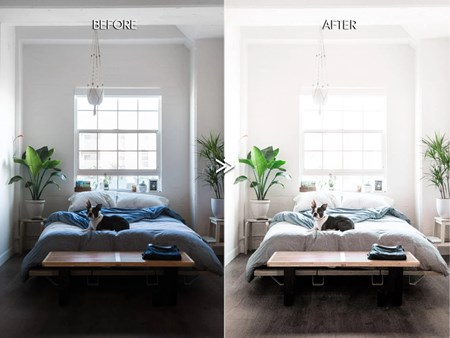
6. Edit for Clarity and Consistency
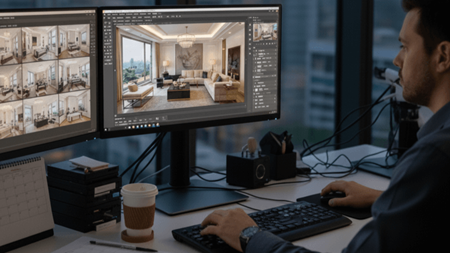
Editing is where your photos come together—but it should enhance, not exaggerate. Adjust brightness, contrast, and white balance to ensure accurate colors and clean visuals. Straighten lines and correct lens distortion for a professional finish.
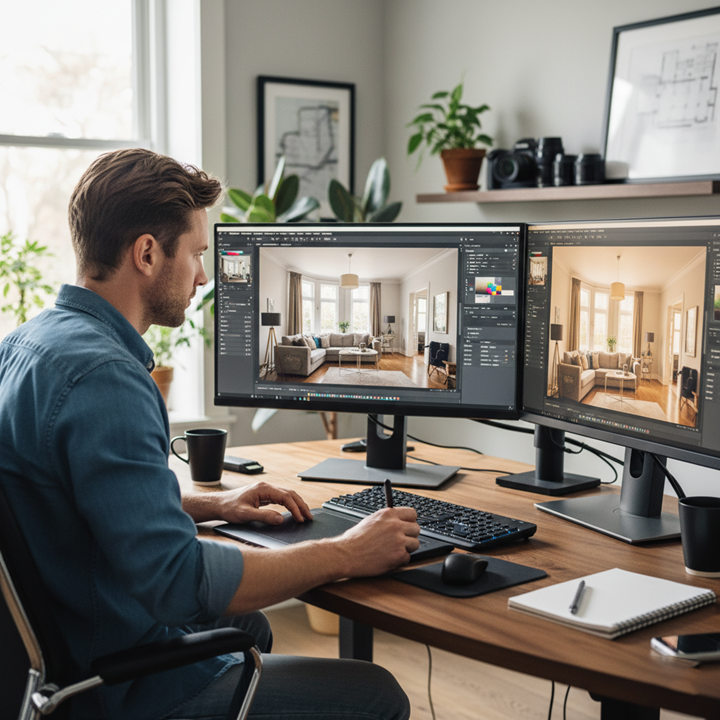
Avoid heavy filters or unrealistic edits. Buyers in 2026 value authenticity, and overly edited photos can create distrust. Consistency across all images is also key. This ensures your listing feels cohesive and visually appealing from start to finish.
7. Highlight Key Selling Features
Every property has standout features—your job is to make them shine.
This could include:
- Large windows with natural light
- A modern kitchen or island
- A spacious balcony or outdoor area
Frame these features clearly and give them dedicated shots. Don’t let them get lost in wide room photos. One of the most effective real estate photography tips is simple: show buyers exactly why this property is worth their attention.
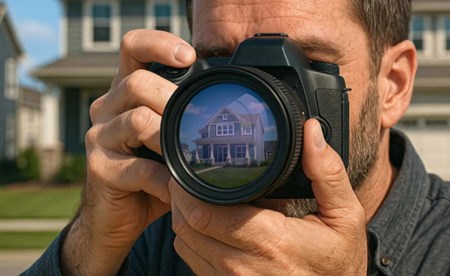
8. Capture Exterior and Surrounding Context
Interior photos are important, but exterior shots complete the story.
Capture:
- The front of the property
- Outdoor spaces like gardens or balconies
- Neighborhood context (if relevant)
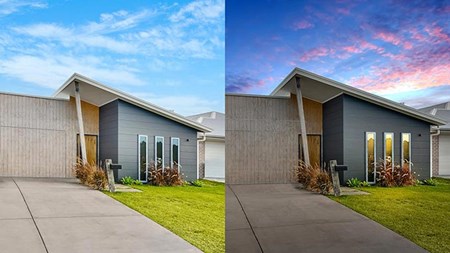
Golden hour is ideal for exterior shots, adding warmth and depth to your images. In 2026, lifestyle context is becoming increasingly important. Buyers want to see not just the home—but the environment around it.
9. Optimize Images for Mobile and Digital Platforms
Most buyers browse listings on their phones. This means your photos need to look great on smaller screens. Use clear compositions, strong lighting, and minimal clutter so details remain visible. Avoid overly complex shots that lose clarity when scaled down.
Also consider how your images appear on platforms like social media, where vertical or square formats may perform better. This is one of the more modern real estate photography tips, but it’s critical for maximizing reach and engagement.
10. Leverage Technology: HDR, Drones, and AI Tools
Technology is transforming real estate photography.
- HDR imaging helps balance bright windows and darker interiors
- Drone shots provide stunning aerial views for larger properties
- AI editing tools streamline workflows and improve consistency
These tools can elevate your visuals significantly—but they should always support authenticity, not replace it. The best results come from combining technical tools with strong fundamentals.
How Cosyfoto Can Elevate Your Real Estate Photography
Even with the best real estate photography tips, execution takes time, skill, and consistency. That’s where professional solutions like Cosyfoto come in.
Cosyfoto helps real estate professionals enhance their listing visuals through high-quality photo editing, optimization, and visual improvements tailored for property marketing. From correcting lighting and composition to ensuring consistency across listings, it allows agents and sellers to present their properties at their absolute best—without the need for complex editing workflows.
For anyone looking to scale their listings while maintaining a professional, polished look, integrating a solution like Cosyfoto can be a game-changer.
Common Mistakes to Avoid
While applying the right techniques is important, avoiding mistakes is equally critical.
Some common issues include:
- Dark or uneven lighting
- Cluttered or unprepared spaces
- Over-editing that looks unrealistic
- Crooked lines and poor framing
- Ignoring exterior shots
These mistakes can quickly reduce the effectiveness of your listing, regardless of the property’s actual quality.
Final Thoughts
In a digital-first real estate market, visuals are your strongest selling tool. The difference between a listing that gets ignored and one that generates strong interest often comes down to photography.
By applying these 10 best real estate photography tips for 2026, you can create images that not only look great—but drive real results.
Focus on lighting, composition, staging, and authenticity. Use technology wisely, and always think from the buyer’s perspective.
Because at the end of the day, great real estate photography doesn’t just show a property—it helps sell it.
 alt="">
 alt="">
 alt="">
 alt="">
 alt="">
 alt="">
 alt="">