
AI-Edited Real Estate Photos in 2026
Photo Editing
2026/08/05
Artificial intelligence has made real estate photo editing faster and more accessible than ever. A few clicks can furnish an empty room, replace a dull sky, remove unwanted objects or show a property with different flooring and paint colors. These tools can help buyers visualize a home’s potential, but they also make it much easier to create images that no longer accurately represent the property.
As a result, AI real estate photo editing rules have become an important concern for agents, photographers, brokerages and editing companies in 2026. The issue is not whether AI can be used. The real question is whether an edited image still presents an honest picture of what buyers will find when they visit the property.
There is currently no single disclosure rule that applies identically to every real estate listing in the United States. Instead, professionals must consider several overlapping standards, including consumer advertising law, state licensing regulations, professional ethics and local Multiple Listing Service rules.
This article provides general compliance guidance rather than legal advice. Agents and photographers should confirm the requirements of their brokerage, state licensing authority and local MLS before publishing altered listing images.
Why AI Photo Disclosure Matters in 2026
Real estate photography has always involved some level of post-production. Photographers routinely adjust exposure, correct white balance, straighten vertical lines and balance interior and exterior lighting. These edits generally improve image quality without changing the property itself.
AI makes it possible to go much further. It can remove utility poles, repair damaged walls, replace old flooring, redesign landscaping, add furniture or generate a completely different view through a window. Even when the final image looks realistic, it may communicate details that do not exist.
Under federal truth-in-advertising principles, advertisements must be truthful and not misleading. The Federal Trade Commission explains that an advertisement may be deceptive when it includes—or omits—information that is likely to mislead a reasonable consumer and is important to that consumer’s decision. When a disclosure is needed to prevent deception, the FTC says it should be clear and conspicuous.
For real estate professionals, that principle is especially relevant because photographs can influence whether someone schedules a showing, submits an offer or forms expectations about a property’s condition.
The Difference Between Enhancement and Alteration
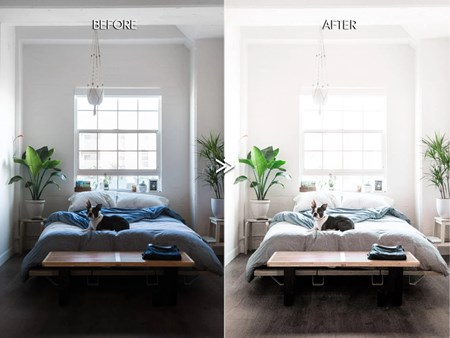
A useful way to understand AI real estate photo editing rules is to separate visual enhancement from property alteration. Enhancement improves the technical presentation of what the camera captured. Examples include correcting brightness, reducing color casts, improving contrast, straightening vertical lines, blending exposures and applying moderate sharpening. The property remains materially the same.
Alteration adds, removes or changes something a buyer could reasonably believe is part of the property. Virtual furniture, reconstructed walls, replacement flooring, removed power lines and generated landscaping are examples. These edits may still be useful marketing tools, but they should normally be disclosed.
The technology used does not determine whether disclosure is necessary. A misleading alteration does not become acceptable because it was completed manually in Photoshop rather than generated by AI. Conversely, an AI-assisted exposure correction does not automatically require a warning simply because artificial intelligence was involved.
The most important question is: Could this edit cause a reasonable buyer to misunderstand the property’s current condition, features, surroundings or included items? When the answer may be yes, disclosure is the safer approach.
NAR Ethics Require a “True Picture”
Agents who are REALTORS® must also consider the National Association of REALTORS® Code of Ethics.
Article 2 of the 2026 Code instructs REALTORS® to avoid exaggeration, misrepresentation or concealment of pertinent facts relating to a property or transaction. Article 12 requires truthful real estate communications and a “true picture” in advertising and marketing. Standard of Practice 12-10 specifically extends that obligation to online content and prohibits manipulation that produces deceptive results, including the use of misleading images.
These ethical duties do not prohibit editing or virtual staging. They require professionals to ensure that edited media does not deceive consumers. An attractive image can still present a true picture, provided it does not hide material conditions or imply that imagined features currently exist.
A disclosure does not necessarily make every alteration acceptable. For example, labeling an image “digitally altered” may not be enough if it removes a major defect, changes the apparent size of a room or creates a view the property could never have. Disclosure supports transparency, but it should not be treated as permission to misrepresent reality.
California’s 2026 Digitally Altered Image Law
California now provides one of the clearest examples of formal AI real estate photo editing rules.
Assembly Bill 723 added Section 10140.8 to the California Business and Professions Code, effective January 1, 2026. It applies when a real estate broker, salesperson or someone acting on their behalf uses a digitally altered image in advertising or promotional material for the sale of real property.
Under the law, the advertisement must contain a reasonably conspicuous statement on or next to the image explaining that it has been altered. It must also provide access to the original, unaltered image through a publicly accessible website, URL or QR code.
When the altered image appears on a website controlled by the agent, broker or person acting on their behalf, the original version must also appear in the posting or be accessible through a compliant public link.
The law defines a digitally altered image as one changed through editing software or AI to add, remove or modify elements such as:
- Furniture, appliances and fixtures
- Flooring, walls and paint colors
- Landscaping, hardscaping and facades
- Floor plans and exterior features
- Utility poles, streetlights and neighboring properties
- Elements outside the home or visible through its windows
California’s law also contains an important exception. Disclosure is generally not required when edits are limited to lighting, sharpening, white balance, color correction, angle correction, straightening, cropping, exposure or similar common adjustments that do not change the representation of the property.
California Regional MLS guidance reflects the same distinction. Its guidance says altered images should be labeled and accompanied by the original image, while ordinary aesthetic adjustments that do not change the property’s representation are treated differently.
Which Real Estate Photo Edits Should Be Disclosed?
Because requirements vary, agents should always review their local MLS policy. However, several categories generally deserve clear disclosure.
Virtual staging
Virtually added sofas, beds, dining tables, artwork and décor should be labeled. Buyers need to understand that these items are not physically present and are not included in the sale. A simple disclosure could say:
“Virtually staged. Furniture and décor shown are digitally added and are not included with the property.”
Publishing the original empty-room photo alongside the staged version is an effective transparency practice, even where it is not expressly required.
Object removal
Removing seller belongings, trash bins or temporary clutter may seem harmless, but the edit still changes what was photographed. Removing permanent or environmental elements—such as utility lines, neighboring buildings, stains, cracks, damage or structural features—is much more serious. When objects are removed, preserve the original image and ask whether the change could affect a buyer’s understanding. When uncertain, label the image rather than assuming the removal is too minor to matter.
Renovation concepts
Images that show proposed flooring, new cabinets, different paint, renovated bathrooms or redesigned exteriors should be described as concepts rather than current conditions. Suggested wording includes:
“Digital renovation concept. Improvements shown have not been completed.”
The word “concept” is important because it tells viewers they are seeing a possibility, not a finished feature.
Day-to-dusk conversions and sky replacement
A day-to-dusk conversion can create a powerful hero image. However, it may involve replacing the sky, illuminating windows, activating exterior lights and changing the overall environment. Because these changes go beyond basic exposure correction, the conservative approach is to label the image as a day-to-dusk or virtual twilight conversion and retain the original daytime photograph.
Landscaping and exterior enhancement
Basic color correction can restore grass and plants to a natural appearance. Generating an entirely new lawn, removing neighboring buildings, adding mature trees or creating a nonexistent view is different. Exterior edits deserve particular caution because location, surroundings and views may materially affect a buyer’s decision.
What Usually Does Not Need a Special Disclosure?
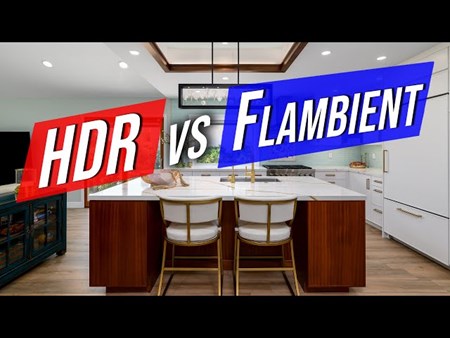
Routine professional editing usually does not require a separate AI label when it keeps the property accurate. This may include exposure balancing, white-balance correction, moderate color adjustment, lens correction, sharpening, noise reduction, perspective correction, cropping and HDR blending. California’s statute expressly excludes many of these common adjustments when they do not change the property’s representation.
The phrase “when they do not change the representation” is crucial. Brightening a dark room so that it resembles how the room appears in person is different from making a windowless room appear flooded with natural sunlight. Correcting perspective is different from digitally widening a room. Natural-looking editing should improve clarity without inventing property features.
A Safer Disclosure Workflow for Agents and Photographers
Compliance should begin before the images are delivered, not after the listing has already been published.
- Preserve every original file. Keep untouched source images in a clearly organized folder. Do not overwrite them when exporting the edited versions.
- Separate standard edits from material alterations. Use different delivery folders for natural enhancements, virtually staged images, object removal and conceptual renovations.
- Label altered files clearly. File names such as
living-room-virtual-stagingorexterior-day-to-duskreduce the risk of an altered image being uploaded without disclosure. - Place disclosures near the image. Do not hide an important disclaimer at the bottom of a long property description. The FTC’s general guidance emphasizes that disclosures needed to prevent deception should be clear and conspicuous.
- Provide the original version. Place it immediately before or after the altered image where the MLS allows. This creates a straightforward visual comparison and gives buyers appropriate context.
- Check image syndication. A disclosure entered into one MLS field may not appear the same way on every portal or social platform. Review the public-facing listing after it has syndicated.
- Document the instructions. Photographers and editing companies should keep the client’s editing request, final deliverables and disclosure recommendations. Agents should confirm that the seller and broker understand how altered media will be used.
Transparency Can Strengthen Marketing
Disclosure does not make a listing less attractive. Clear labeling can demonstrate professionalism while allowing agents to use virtual staging, dusk conversions and renovation concepts responsibly. Buyers generally understand that an empty room can be virtually furnished or that a daytime photograph can be presented as twilight. The problem begins when the marketing makes the imagined version indistinguishable from the property’s current reality.
A transparent listing can show both possibilities:
- The original image shows the home as it currently exists.
- The edited image helps buyers visualize its presentation or potential.
This approach allows creative marketing without sacrificing credibility.
How CosyFoto Supports Responsible Real Estate Editing
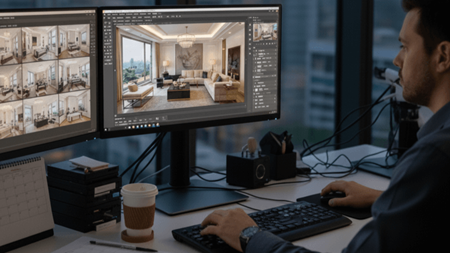
CosyFoto provides real estate photo editing services including general enhancement, retouching, virtual staging, virtual dusk conversion and floor-plan creation. Its editing approach is designed to help properties look polished while preserving important visual details and supporting photographers with scalable post-production.
Responsible editing requires more than fast software. It requires clear instructions, consistent quality control and an understanding of which changes are basic enhancements and which changes should be treated as altered or conceptual media.
When submitting a project, clients should specify whether they need natural enhancement, virtual staging, object removal or another material change. They should also request original and edited versions when their MLS or local regulations require both.
Final Thoughts on AI Real Estate Photo Editing Rules
AI will remain a valuable part of real estate marketing in 2026. It can accelerate production, reduce repetitive work and help buyers imagine how an empty or outdated property could look. However, the best use of AI is not to make a property appear to be something it is not. It is to present the property clearly, professionally and honestly.
The safest approach to AI real estate photo editing rules is straightforward: preserve the original, disclose material alterations, place labels where buyers can see them and never use editing to conceal important facts. Agents and photographers should also verify their state law, brokerage policy and MLS requirements because the rules are not identical in every market.
Professional enhancement and truthful advertising can work together. When every image remains realistic—or is clearly identified when it is not—strong photography builds both buyer interest and long-term trust.
 alt="">
 alt="">
 alt="">
 alt="">
 alt="">
 alt="">
 alt="">
 alt="">