
How to Keep Every Listing Consistent: A Guide for Real Estate Photographers
Photo Editing
2026/09/08
Consistency is one of the most valuable qualities a real estate photographer can offer. An agent who hires you isn't only paying for one beautiful set of photos. They're trusting you to deliver the same professional standard across their next listing, and the one after that.
That's harder than it sounds. Every property presents different conditions. One home may be a bright modern apartment with large windows, while the next is a traditional house with warm lighting and dark interiors. Weather changes. Room sizes change. Photographers change. Even the amount of time available for a shoot can vary.
Yet the finished work still needs to feel like it came from the same photography business.
Creating consistent real estate listings doesn't mean making every property look identical. It means building a reliable production system that maintains your standards while allowing each home's individual character to remain visible.
Here is how photographers and real estate media agencies can create that consistency from the moment they arrive at a property to the moment the final gallery reaches the client.
Why Consistency Matters in Real Estate Photography
Think about what an agent experiences when working with a photographer repeatedly. If the first listing is bright, clean, and polished but the next is darker with noticeably different colors, the photographer's quality can begin to feel unpredictable.
Consistency builds confidence. Clients know what they're going to receive when they book you. That reliability can become an important part of your brand, especially when agents manage multiple listings throughout the year.
Consistency also matters within an individual gallery. A buyer scrolling through listing photos shouldn't move from a bright living room into an unusually dark kitchen and then into an overly warm bedroom. The photographs should flow naturally from one space to another.
The property can change. Your quality standard shouldn't.
1. Start With a Repeatable Shooting Process
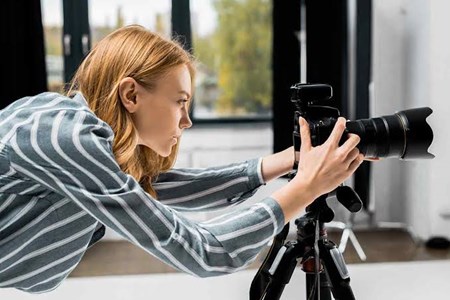
Consistent editing becomes much easier when the source photography is consistent. Develop a shooting routine you can repeat at every property. Camera height is a good example. If one room is photographed from chest height and another from significantly lower, the gallery may feel inconsistent even after perfect editing. The same applies to composition, focal length, exposure strategy, and white balance.
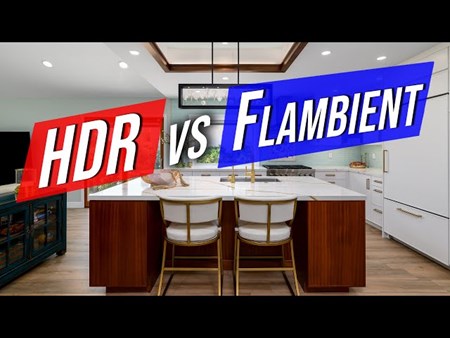
HDR photographers should use a predictable bracketing system. Flambient photographers should maintain a consistent process for ambient, flash, and window exposures. The objective isn't to remove creativity. It's to standardize the technical decisions that don't need to be reinvented at every property. When your capture process becomes predictable, your editing process becomes more predictable too.
2. Create a Standard Shot List
A shot list helps ensure that every client receives a complete gallery. For a standard property, you might establish expectations for exterior angles, living spaces, kitchens, bedrooms, bathrooms, and important architectural details. Larger or premium properties may require additional coverage, but your baseline remains consistent.
Shot lists become even more valuable when you operate a real estate media agency with multiple photographers. Without a shared standard, one photographer might deliver four kitchen angles while another delivers only one. One may photograph every bathroom while another skips smaller spaces.
A simple shot list creates a minimum quality standard across the team. Clients shouldn't have to wonder whether the experience will change depending on which photographer arrives.
3. Define Your Visual Style
Consistency becomes difficult when your editing style exists only in your head. You need to define what your brand's photographs should generally look like. Consider interior brightness, contrast, color temperature, saturation, window views, exterior colors, and shadow detail.
Do you prefer bright, airy interiors or a slightly more natural exposure? Should white walls be completely neutral? How much exterior detail should appear through windows? How vibrant should lawns and skies look? There's no single correct answer. The important thing is making those decisions intentionally and applying them consistently. Your visual style becomes part of what clients associate with your photography business.
4. Build a Reference Gallery
Words aren't always enough to communicate a visual style.
"Natural," "bright," and "clean" are useful descriptions, but they can mean different things to different people.
Reference images solve that problem. Choose several completed photographs that represent your ideal results. Include different types of rooms, lighting conditions, exteriors, and window views. If you outsource editing, these examples give your editor a clear visual target.
If you run a media agency, the same references can help photographers and editors work toward one shared standard. Update your reference gallery as your style develops. Your work may naturally evolve over time, and your production standards should evolve with it.
5. Keep Exposure Consistent From Room to Room
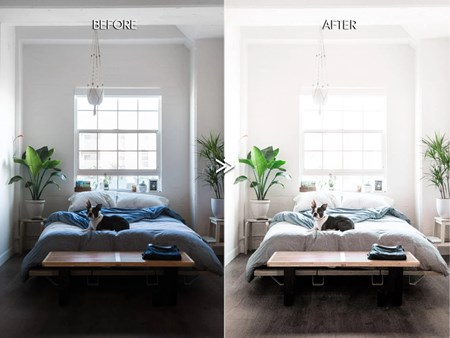
One of the easiest ways to make a gallery feel disconnected is inconsistent brightness. Every room doesn't need exactly the same exposure. A naturally dark home office shouldn't suddenly look as bright as a sun-filled living room.
However, dramatic changes in editing can make buyers feel like they're looking at photographs from different properties. The goal is balanced exposure. Maintain enough natural variation to represent the property accurately while creating a smooth visual experience throughout the gallery. This is where reviewing the entire listing becomes more useful than judging each photograph individually.
6. Control White Balance and Color
Mixed lighting is one of the biggest challenges in real estate photography. A single property may contain daylight, warm lamps, cool LEDs, colored walls, reflective floors, and light bouncing from furniture. Without careful correction, one room can appear neutral while the next becomes heavily yellow or blue.
Consistent white balance doesn't mean removing every trace of warmth. A room should still retain its natural atmosphere. Instead, focus on preventing distracting color shifts. Walls, ceilings, cabinetry, flooring, and other important surfaces should look believable and remain reasonably consistent between different angles. Accurate color helps the gallery feel polished without making the editing obvious.
7. Standardize Window Pulls
Window pulls can quickly reveal differences between editors or galleries. One photograph may have a bright, natural-looking window while the next contains an extremely dark exterior view. That inconsistency can distract from an otherwise strong gallery. Decide what your standard window treatment should look like.
For most listings, you may prefer visible exterior detail while allowing windows to remain naturally brighter than the interior. For properties with exceptional views, you might use stronger window pulls to highlight the scenery. Whatever approach you choose, provide reference examples to your editor. The goal should be believable windows that complement the room rather than looking pasted into the photograph.
8. Keep Exterior Editing Natural
Exteriors introduce another set of variables: weather, seasons, landscaping, sunlight, and sky conditions. A consistent editing style helps different properties feel connected to your brand without making them look artificial.
Establish guidelines for sky enhancement, grass color, exposure, contrast, saturation, and object removal. Be particularly careful with color. Turning every lawn fluorescent green or every sky intensely blue may make images stand out initially, but it can also make your portfolio look overprocessed. Natural, controlled enhancement tends to age better and helps keep attention on the property itself.
9. Make Advanced Services Feel Like Part of the Same Listing
Many real estate photographers now deliver more than standard property photos. A listing may include virtual staging, day-to-dusk images, retouching, floor plans, or other marketing assets. These shouldn't feel like unrelated products. A day-to-dusk exterior should still resemble the daytime property. Virtual staging should respect the room's perspective and lighting. Retouched photographs should maintain the same overall color and exposure style as the rest of the gallery.
Consistency needs to extend across every deliverable. This is particularly important for media agencies positioning themselves as complete real estate marketing partners rather than simply photography providers.
10. Use Quality Control Before Delivery
Even strong workflows need a final review. Before delivering a listing, look at the gallery as a complete set.
Check exposure, white balance, vertical lines, window treatments, exterior colors, and overall flow. Look for photographs that appear noticeably different from the rest. You don't need to inspect every pixel. Instead, ask a simple question: does anything interrupt the visual consistency of this gallery?
A short quality-control step can catch problems before the client sees them and reduce revision requests later.
Consistency Becomes Harder as Your Business Grows
Maintaining standards is relatively simple when you're photographing and editing every listing yourself. Growth changes that.
You may begin photographing several properties per day. Another photographer may join your team. Editing may move from your evenings to an external provider. Suddenly, more people are making decisions that affect your final product. This is where documented workflows become important.
Your shooting process, reference gallery, editing preferences, quality standards, and delivery expectations shouldn't depend entirely on one person's memory. Build systems that can be repeated. That's how a photography business grows without its quality becoming unpredictable.
How CosyFoto Helps Keep Listings Consistent
For photographers and media agencies outsourcing post-production, the editing partner becomes an important part of maintaining consistency.
At CosyFoto, photographers can provide editing instructions and preferences to help establish the visual direction they want across their work.
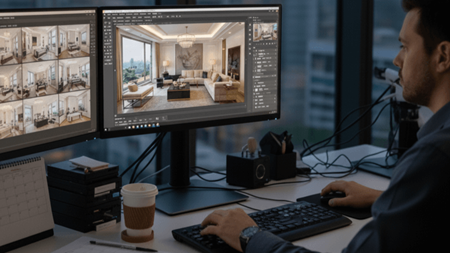
This is especially useful when you're sending multiple listings for editing. Instead of treating every gallery as an unrelated project, reference images and clear preferences can provide a more consistent target for exposure, white balance, color, contrast, and overall presentation. CosyFoto's standard editing can address core areas such as exposure, white balance, contrast, color adjustments, noise reduction, and lens correction. For photographers, that means many of the technical elements affecting gallery consistency can be handled within the same post-production workflow.
Consistency Across HDR and Flambient Photography
Your capture technique may change depending on the property. You might use HDR for a standard residential listing and flambient for a premium home with more challenging lighting. The finished galleries can still reflect the same brand.
HDR processing should remain balanced without becoming overly processed, while flambient blending should combine accurate colors with believable ambient light and shadows. Reference images are particularly helpful here because they show the editor the final look you're trying to achieve regardless of the capture technique used.
Your clients don't necessarily care whether you used brackets, flash, or a combination of both. They care that the photographs look professional and consistent.
Keep Additional Services Connected
CosyFoto also provides services including Virtual Dusk, Virtual Staging, Retouching, and Floor Plans. Using multiple post-production services within one broader workflow can make it easier to maintain a cohesive property marketing package.
For example, virtual staging should look believable alongside the original photographs rather than dramatically changing the brightness or atmosphere of the room. A Virtual Dusk image can create a more dramatic presentation while still preserving the recognizable appearance of the property.
Retouching can remove distractions without making the edited photograph feel noticeably different from the rest of the gallery. The objective is for buyers to experience one property—not a collection of unrelated editing styles.
Use the Free Test to Establish Expectations
When working with a new editing provider, consistency rarely happens by accident. CosyFoto offers a free test edit, which photographers can use to establish their preferred direction before moving into regular orders. Use the test as more than a simple quality check.
Compare the result with your portfolio. Look at exposure, colors, white balance, contrast, and window treatment. If something differs from your preferred style, communicate it clearly and provide references. Establishing expectations early can make regular outsourcing much smoother.
A Workflow That Can Grow With Your Business
CosyFoto operates 24/7 and currently lists standard photo editing starting from $0.70 per image, with a listed delivery window of 12–24 hours for photo editing. For growing photographers and media agencies, external editing support can help increase post-production capacity without requiring every additional shoot to create another evening of editing.
But scalability isn't only about processing more photographs. The real challenge is processing more photographs while maintaining the same standard.
A photographer handling three listings a week and an agency handling dozens of properties may operate at very different volumes, but their clients expect the same thing: predictable quality. Clear instructions, reference images, repeatable capture methods, and an editing partner that understands the desired style can help create that consistency.
Final Thoughts
Creating consistent real estate listings doesn't mean forcing every home into exactly the same visual formula. Properties should retain their individual character.
A bright coastal home should feel different from a warm traditional interior. A luxury apartment overlooking a city should be presented differently from a suburban family home. Consistency comes from the standards behind the images.
Use repeatable shooting techniques. Establish a shot list. Define your editing style. Build a reference gallery. Standardize exposure, colors, window pulls, and exterior editing. Review complete galleries before delivery. As your business grows, document those standards so photographers and editors can follow the same direction.
And when outsourcing becomes part of your workflow, work with an editing partner that can understand and support those preferences over time. With CosyFoto handling post-production, you can focus more of your time on shooting, serving clients, and growing your real estate photography business—while keeping the quality your clients recognize from one listing to the next. Different properties. Different challenges. One consistent standard.
 alt="">
 alt="">
 alt="">
 alt="">
 alt="">
 alt="">
 alt="">
 alt="">