
How to Scale Real Estate Photo Editing Without Sacrificing Quality
Photo Editing
2026/09/14
Growing a real estate photography business sounds simple: book more shoots, photograph more properties, and increase revenue. But growth creates another challenge that isn't always obvious at the beginning—post-production.
When you're photographing a few properties each week, editing everything yourself may be manageable. You finish the shoot, return to your computer, process the images, deliver the gallery, and move on to the next client. As your schedule grows, that workflow becomes harder to maintain.
Five shoots become ten. Hundreds of images need to be processed every week. HDR brackets need blending, flambient exposures need combining, windows need attention, colors need correcting, and agents still expect fast delivery.
Eventually, editing can become the bottleneck preventing your photography business from growing.
Learning how to scale real estate photo editing isn't simply about editing faster. It's about creating a repeatable system that can handle more images while maintaining the quality and style your clients expect. Here's how to build that system.
Why Photo Editing Becomes a Bottleneck
Photography and editing scale differently. A photographer can improve shooting efficiency by creating a repeatable process. Once you're experienced, you may be able to photograph several properties in one day. But every additional shoot creates additional post-production.
If one property produces 40 final images and you photograph five properties, that's already 200 photographs requiring review and editing—not including the multiple exposures captured for HDR or flambient workflows. During busy periods, the workload can quickly become overwhelming.
You may finish a full day of photography only to begin another several hours of editing at night. That's when growth becomes difficult. Taking on another client doesn't simply mean another photography appointment. It also means more images to process, more files to manage, more quality control, and more delivery deadlines.
To scale effectively, post-production needs its own system.
1. Standardize Your Shooting Workflow
Scalable editing starts with predictable source files. If every property is photographed differently, every editing order requires additional decisions. HDR photographers should establish a consistent bracketing method. Flambient photographers should maintain a predictable sequence for ambient, flash, and window exposures.
File naming and organization should also follow the same structure whenever possible. The goal is to make your files easy to understand before editing begins. This becomes especially important when another person handles your post-production. An editor shouldn't have to guess which exposures belong together or which frame should be used for a particular window.
A standardized shooting process reduces confusion and allows editing to move faster.
2. Define Your Editing Style
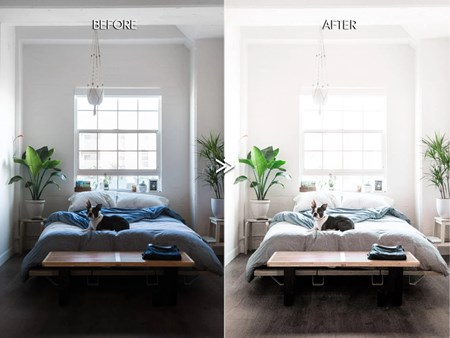
You can't scale something that hasn't been clearly defined. Many photographers know what they like visually but haven't documented it. Consider your preferences for interior brightness, white balance, contrast, saturation, shadows, window pulls, exterior colors, vertical correction, and overall realism. Then create reference images showing those preferences.
Instead of telling an editor to make images "bright and natural," provide examples demonstrating exactly what bright and natural mean for your brand. Your editing style becomes the standard everyone can follow. This is especially important for real estate media agencies with multiple photographers and editors. Without a shared visual standard, galleries can begin to look different depending on who captured or processed them. Growth should increase your capacity—not dilute your brand.
3. Create a Repeatable Editing Workflow
A scalable workflow should minimize unnecessary decisions. Think about what happens from the moment a shoot ends until the client receives the finished gallery. Files need to be transferred, organized, uploaded, edited, reviewed, corrected if necessary, and delivered. Each unnecessary step adds time.
Develop a standard process for every project. Use consistent folder structures and file names. Establish how special editing requests are communicated. Decide who performs quality control and when. When everyone knows what happens next, projects move through production more efficiently. The goal isn't to remove human judgment. It's to eliminate repetitive administrative work that doesn't improve the final photographs.
4. Separate Standard Editing From Special Requests
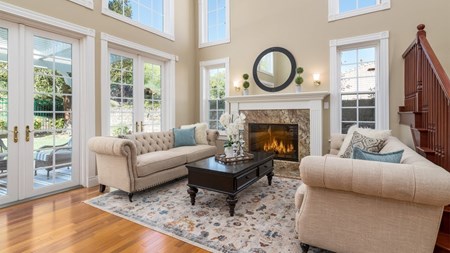
Not every image requires the same level of post-production. Standard listing photos may need exposure blending, white balance, color correction, lens correction, perspective adjustments, and general enhancement. Other images may require object removal, advanced retouching, virtual staging, or day-to-dusk transformations.
Separating these categories makes your workflow easier to manage. Your standard editing process should be predictable and repeatable. Special requests should be clearly identified before editing begins. This prevents editors from having to guess what needs additional attention and reduces revisions later. For larger media companies, clear service categories also make pricing, scheduling, and client communication easier.
5. Build Quality Control Into the Process
Scaling shouldn't mean lowering your standards. Quality control becomes more important as image volume increases because you may no longer personally edit every photograph. Instead of checking every adjustment, focus on the elements that define your brand. Are interiors consistently exposed? Are colors accurate? Are vertical lines straight? Do window pulls look natural? Are exterior images consistent? Does the gallery flow smoothly from one room to another?
Review the listing as a complete set rather than obsessing over individual pixels. You can also create a simple quality-control checklist for team members or editing partners. The objective is to catch meaningful problems before the client sees them without turning quality control into another editing session.
6. Reduce Revisions Before Increasing Volume
A workflow that requires constant revisions won't scale well. Imagine processing ten listings every week and requesting corrections on half of them. Now imagine processing fifty. Small inefficiencies become major problems at higher volume. Before significantly increasing your workload, identify the reasons revisions happen.
If interiors repeatedly come back too dark, establish a brighter standard. If window pulls are consistently stronger than you prefer, provide reference images. If exterior greens are too saturated, communicate that preference clearly. Repeated feedback should eventually become part of your standard workflow. The fewer unnecessary revisions each project requires, the easier it becomes to handle additional volume.
7. Know When to Stop Editing Everything Yourself
Many photographers start their businesses by doing everything. You handle sales, scheduling, photography, editing, delivery, marketing, and customer service. That approach makes sense at the beginning because it keeps costs low and gives you complete control.
But eventually, doing everything yourself can limit growth. If you spend four hours editing after a full day of shoots, those four hours aren't available for another client, sales outreach, marketing, team management, or personal time. Ask yourself where your time creates the most value. For many established real estate photographers, that isn't manually adjusting hundreds of images every night.
Your expertise may be more valuable behind the camera, communicating with agents, developing new services, or building relationships that generate additional bookings. That's when outsourcing becomes less about saving time and more about creating capacity.
8. Use Outsourcing as a Scaling System
Outsourcing shouldn't simply mean sending random images to an editor whenever you become too busy. For it to scale effectively, it should become part of your normal production workflow.
Choose an editing partner, establish your style, provide reference images, communicate your expectations, and refine the process through feedback. The beginning may require more communication. That's normal.
Your editing partner needs to understand how bright you want interiors, how you prefer windows handled, how much contrast you like, and what your exterior images should look like. Over time, the process should become more predictable. Eventually, you should be able to send standard orders with minimal additional explanation. That's when outsourcing becomes a system rather than an emergency solution.
9. Plan for Seasonal Volume
Real estate photography demand isn't always consistent. Busy seasons can create sudden increases in orders, while slower periods may produce much lighter workloads. This makes building a large permanent internal editing team difficult for some photography businesses.
During peak periods, you may suddenly need significantly more editing capacity without knowing whether that volume will continue throughout the year. A flexible post-production system allows your editing capacity to adjust with your workload. Instead of asking, "How many images can I personally edit tonight?" the question becomes, "How many shoots can my production system reliably handle?" That's a much more scalable way to think about growth.
10. Protect Consistency as You Grow
One of the biggest risks of scaling is losing the style that helped your business grow in the first place. When you edited everything yourself, every photograph passed through your eyes. Once multiple photographers and editors become involved, consistency requires systems rather than personal control.
Create reference galleries. Document editing standards. Establish shooting procedures. Communicate changes clearly. If your style evolves, update those references so everyone works toward the new standard. Clients shouldn't notice that your production process has become larger. They should simply continue receiving the quality they expect.
How CosyFoto Helps Photographers Scale Post-Production
For photographers and media agencies reaching the limits of in-house editing capacity, CosyFoto can become part of a scalable post-production workflow. CosyFoto works with real estate photographers on professional photo editing and related property post-production services. The company's own content emphasizes efficient, consistent editing for photographers managing larger image volumes.
The biggest advantage isn't simply having someone else adjust your images. It's separating your shooting capacity from your personal editing capacity. If you can photograph five properties in a day but only edit two or three efficiently, editing controls how quickly the business can grow. Outsourcing helps remove that limitation.
Establish Your Style Before Scaling Volume
Sending hundreds of photographs immediately isn't necessarily the best way to start an outsourcing relationship. First, establish your expectations. CosyFoto offers a free test edit, which can be useful for comparing the result with your existing portfolio before moving into larger volumes. Look closely at exposure, white balance, colors, contrast, windows, and overall realism.
Provide reference photographs representing your preferred style and communicate specific changes when necessary. Once the result is aligned with your expectations, you have a stronger foundation for increasing volume. The objective is to establish the standard first and scale it second.
Handle Different Editing Needs Through One Workflow
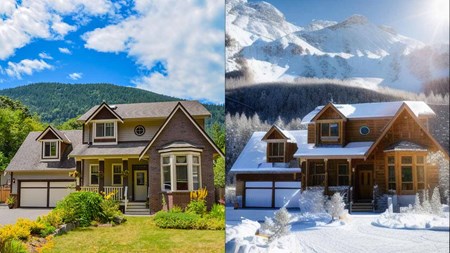
As a photography business grows, clients often begin requesting more than basic photo enhancement. An agent might need an empty room virtually staged. Another property may need a stronger hero image created through a day-to-dusk transformation. Some listings require detailed retouching, while others need floor plans alongside the photography.
CosyFoto offers standard photo editing as well as services including Virtual Dusk, Virtual Staging, Retouching, and Floor Plans. Keeping more post-production needs within one broader workflow can simplify production for photographers and real estate media agencies. Instead of coordinating several unrelated editing providers, you can create a clearer process for standard and advanced orders.
Scale HDR and Flambient Production
Higher photography volume also means processing more source files. An HDR gallery may require several bracketed exposures for every final image. Flambient photography can generate ambient, flash, and window frames that need to be carefully combined. A 40-image final gallery can therefore represent far more than 40 source files.
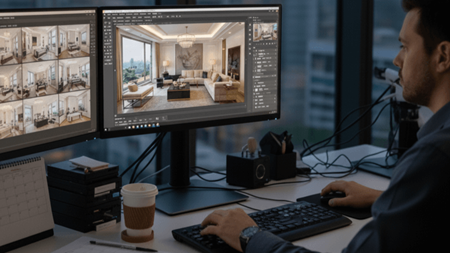
Processing those files manually becomes increasingly time-consuming as bookings increase. An external editing workflow can handle the post-production while photographers continue shooting. This is particularly valuable when your objective is to increase the number of appointments you can accept without increasing the number of evenings spent at your computer.
Build Around a 24/7 Workflow
Photography and editing don't necessarily need to happen during the same working hours. CosyFoto operates 24/7, allowing photographers to send files into post-production after completing their shoots. That can create a more efficient production cycle. You spend the day photographing properties and working with clients. Post-production can continue afterward instead of requiring you to personally begin another shift of editing.
CosyFoto's website currently lists professional photo editing starting from $0.70 per image, making outsourced editing something photographers can evaluate not only as a time-saving tool but also as part of their cost-per-listing model. For a growing business, that distinction matters. Editing becomes a predictable production expense rather than an unlimited claim on the photographer's time.
Scale Without Losing Your Brand
Outsourcing only works long term if the finished images still feel like your work. That's why reference images, instructions, and consistent feedback remain important even after you stop editing everything yourself. Your photographer-editor relationship should become more efficient over time.
If you consistently request brighter interiors, that preference should become part of the workflow. If you prefer softer window pulls, establish that standard. If your exterior images follow a particular color treatment, provide references.
As expectations become clearer, fewer decisions need to be made from scratch. That creates the foundation for scalable post-production: more images without proportionally more management.
Think in Cost Per Listing, Not Just Cost Per Image
When photographers evaluate outsourcing, it's easy to focus entirely on the editing price. But the more important calculation is what outsourcing allows your business to do.
Suppose editing a property yourself takes two hours. Those two hours have an opportunity cost.
Could you use them to photograph another property? Contact potential clients? Build relationships with agents? Manage your team? Improve your marketing? Or simply finish your workday at a sustainable time?
Scaling requires looking beyond individual expenses and considering the complete production system. The cheapest workflow isn't always the one that creates the most profitable business. The better question is whether your editing process supports or restricts your ability to grow.
Final Thoughts
Learning how to scale real estate photo editing is ultimately about separating business growth from the number of hours you personally have available to edit. Start with standardized shooting. Define your visual style. Organize files consistently. Separate standard edits from special requests. Build quality control into your workflow and reduce recurring revisions before increasing volume. Then decide which parts of post-production genuinely require your personal involvement.
For many photographers and real estate media agencies, outsourcing becomes a logical next step because it creates additional capacity without requiring the photographer to spend more hours editing every time bookings increase. A partner like CosyFoto can support that transition by handling real estate photo editing and additional services while you maintain your preferred standards through clear instructions, references, and feedback. The goal isn't simply to edit more photos.
It's to build a photography business capable of handling more clients, more listings, and more opportunities without sacrificing consistency—or turning every increase in bookings into another late night behind the computer. Shoot more. Edit smarter. Build a workflow that can grow with your business.
 alt="">
 alt="">
 alt="">
 alt="">
 alt="">
 alt="">
 alt="">
 alt="">