
Virtual Staging vs Real Staging: Which Is Better for Selling Homes Faster?
Photo Editing
2026/05/12
In today’s digital-first real estate market, the way a property is presented can make or break a sale. Buyers no longer start their journey at open houses — they begin online, scrolling through dozens of listings and making split-second decisions based on visuals alone. In this environment, staging has evolved from a “nice-to-have” into a powerful marketing tool.
As technology continues to reshape the industry, sellers and agents are faced with an increasingly common question: virtual staging vs real staging — which one actually delivers better results?
Both methods aim to showcase a property in its best light, helping buyers visualize the space and emotionally connect with it. However, they differ significantly in cost, execution, flexibility, and impact. Choosing the right approach requires more than a surface-level comparison - it demands a deeper understanding of how each method influences buyer behavior and overall sales performance.
Understanding the Core Difference Between Virtual Staging vs Real Staging
At its core, the difference between virual staging vs real staging lies in how the transformation is created and experienced.
Virtual staging is entirely digital. Using advanced editing tools, designers add furniture, lighting, textures, and decor to photos of an empty or outdated space. The result is a polished, magazine-quality image that presents the home as fully furnished — without physically altering the property.
Real staging, in contrast, is a physical process. Professional stagers bring in real furniture, artwork, rugs, and accessories to transform the home into a lived-in, aspirational space. This staged environment is then experienced both in photos and in person.
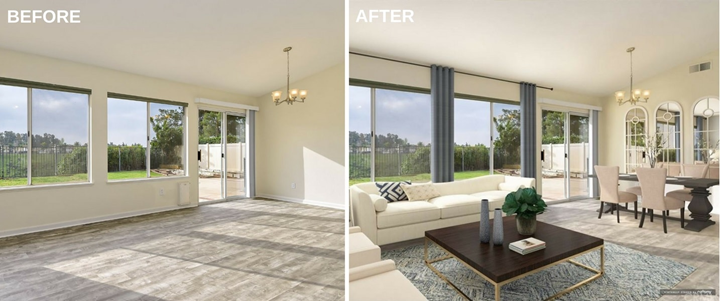
While both approaches share the same goal — making the property more appealing — they operate in two very different dimensions: one exists primarily online, while the other extends into real-world experience.
The Role of First Impressions in the Virtual Staging vs Real Staging Debate
To truly understand the value of virual staging vs real staging , it’s important to recognize how buyers behave.
Studies consistently show that most buyers form their first impression of a property within seconds of viewing listing photos. In many cases, they decide whether to click, scroll, or move on almost instantly. This means that visual presentation is not just important — it is critical.
Virtual staging excels in this exact moment. It transforms empty, lifeless spaces into visually engaging environments that immediately capture attention. Clean lines, modern furniture, and well-balanced compositions help listings stand out in crowded search results.

Real staging also contributes to strong first impressions — but primarily during in-person visits. When buyers walk into a thoughtfully staged home, they experience the space in a tangible way, which can deepen their emotional connection.
This distinction highlights a key insight: virtual staging wins online attention, while real staging strengthens in-person persuasion.
Cost Efficiency: A Major Factor in Virtual Staging vs Real Staging
One of the most practical considerations in the virual staging vs real staging comparison is cost.
Virtual staging is widely known for its affordability. Since everything is done digitally, there are no expenses related to furniture rental, transportation, storage, or installation. Sellers typically pay per image, making it a scalable solution that works well for properties of all sizes.
Real staging, on the other hand, involves multiple layers of cost. Furniture must be rented or sourced, delivered to the property, arranged professionally, and eventually removed. These costs can quickly escalate, especially for larger homes or longer listing periods.
For budget-conscious sellers, virtual staging offers a clear advantage. It allows them to achieve high-impact visuals without the financial burden of physical staging.
Speed and Time-to-Market
In real estate, timing can significantly influence outcomes. The faster a listing goes live, the sooner it can attract potential buyers.
This is where virtual staging provides another strong advantage in the virual staging vs real staging comparison. Once photos are captured, staging can be completed within a short turnaround time — often within 24 to 48 hours. This enables agents to list properties quickly and capitalize on market momentum.
Real staging requires more coordination. Scheduling, furniture selection, delivery logistics, and setup can delay the listing process. While the end result may be impressive, the time investment is considerably higher.
For sellers operating under tight timelines, virtual staging offers a level of speed and convenience that is difficult to match.
Flexibility and Creative Control
Another area where the difference between virual staging vs real staging becomes evident is flexibility.
Virtual staging allows for almost unlimited creative experimentation. A single room can be styled in multiple ways — modern, Scandinavian, luxury, or family-friendly — depending on the target audience. If a particular design doesn’t resonate, it can be adjusted quickly without additional cost.
Real staging, by comparison, is less adaptable once installed. Making changes often requires additional time, labor, and expense. While experienced stagers are skilled at creating appealing environments, the ability to pivot quickly is limited.
This flexibility makes virtual staging particularly valuable in dynamic markets where buyer preferences may vary widely.
The In-Person Experience: Where Real Staging Shines
While virtual staging dominates the digital space, real staging offers a distinct advantage when it comes to physical experience.
Walking into a staged home allows buyers to understand scale, layout, and functionality in a way that photos cannot fully convey. Furniture placement helps define spaces, making rooms feel purposeful and easy to navigate.
More importantly, real staging creates an emotional atmosphere. Soft textures, cohesive color palettes, and thoughtfully arranged decor can make a property feel warm and inviting — qualities that often influence buying decisions on a subconscious level.
This emotional connection is a key reason why real staging remains a powerful tool, especially for higher-end properties.
Managing Buyer Expectations
One of the most important considerations in the virual staging vs real staging g discussion is expectation management.
Virtual staging, if done poorly, can create unrealistic impressions. Overly enhanced images or inaccurate proportions may lead to disappointment when buyers visit the property in person. This can reduce trust and negatively impact the overall perception of the listing.
To avoid this, transparency is essential. Clearly indicating that images are virtually staged helps maintain credibility while still leveraging the benefits of enhanced visuals.
Real staging, by contrast, offers consistency. What buyers see online is what they experience in person, reducing the risk of mismatch and reinforcing trust.
Best Use Cases for Virtual Staging vs Real Staging
The decision between virual staging vs real staging ultimately depends on the specific context of the property.
Virtual staging is particularly effective for:
- Vacant homes that feel empty in photos
- Budget-sensitive listings
- Properties marketed primarily online
- Fast-moving markets where speed is essential
Real staging is often better suited for:
- Luxury homes where experience matters deeply
- Properties with complex layouts
- Listings that rely heavily on open houses
- Markets where emotional appeal drives competition
Understanding these use cases allows sellers to align their staging strategy with their goals.
A Hybrid Approach: The Best of Both Worlds
Rather than choosing one over the other, many sellers are now combining both methods. A hybrid strategy might involve using virtual staging for listing photos to attract online interest, followed by selective real staging for key rooms to enhance in-person showings. This approach balances cost efficiency with experiential impact.
In the evolving landscape of virual staging vs real staging, this blended strategy is becoming increasingly popular — and for good reason.
How CosyFoto Supports Your Staging Strategy
When it comes to winning the virual staging vs real staging decision, execution matters just as much as strategy. Even the best approach can fall flat if the visuals don’t feel realistic, inviting, and aligned with buyer expectations. That’s where CosyFoto makes a difference.
CosyFoto specializes in high-quality real estate photography and virtual staging designed to help your listings stand out in a crowded market. Instead of overly edited or unrealistic designs, CosyFoto focuses on natural lighting, accurate proportions, and thoughtfully curated interiors that feel both aspirational and believable. The goal isn’t just to make a space look good — it’s to make buyers stop scrolling, click into your listing, and imagine themselves living there.
Whether you’re working with an empty apartment, an outdated space, or a property that needs a visual refresh, CosyFoto helps transform your listing into a compelling visual story — quickly, efficiently, and at a fraction of the cost of traditional staging. If you’re looking to maximize impact while keeping your staging strategy flexible and cost-effective, CosyFoto is a smart partner to help you get there.
Final Thoughts: Virtual Staging vs Real Staging
So, when it comes to virual staging vs real staging, which option is truly better?
The answer depends on your priorities. If your goal is to capture attention quickly, reduce costs, and accelerate your listing process, virtual staging offers a highly efficient and scalable solution. It is particularly effective in a market where online impressions drive initial engagement. If your focus is on creating a memorable, emotionally engaging experience that encourages stronger offers, real staging delivers undeniable value — especially during in-person interactions.
Ultimately, the most successful sellers are those who understand the strengths of both approaches and apply them strategically. By aligning your staging method with your property type, budget, and target audience, you can create a compelling presentation that not only attracts buyers but also converts interest into action.
In the end, the question isn’t simply virual staging vs real staging - it’s about choosing the right tool to tell the best possible story for your home.
 alt="">
 alt="">
 alt="">
 alt="">
 alt="">
 alt="">
 alt="">
 alt="">